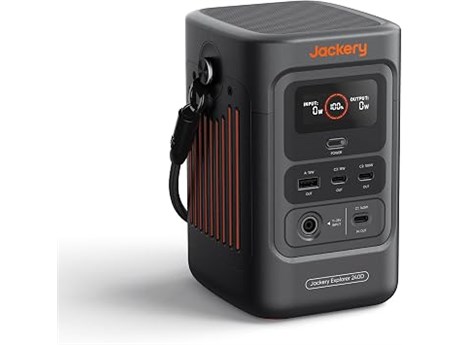
Explorer 240D
240Wh nameplate capacity
Check current availabilityPrice and stock are shown by the retailer.The useful question is not which battery is bigger, but which power profile fits the way you plan to use it.
2026 specification snapshot
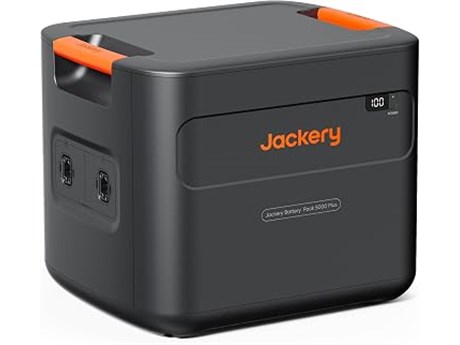
Choose Explorer 240D for lower-capacity, carry-friendly jobs; choose Solar Generator 5000 Plus 5000Wh when runtime headroom matters more than size.
Capacity leader: Solar Generator 5000 Plus 5000Wh Portability leader: Solar Generator 5000 Plus 5000Wh AC output leader: Solar Generator 5000 Plus 5000Wh
A side-by-side reading of published specifications, limited to specification fields and calculated estimates.
| Specification | Explorer 240D | Solar Generator 5000 Plus 5000Wh | Specification edge |
|---|---|---|---|
| Battery capacity | 240Wh | 5,000Wh | Solar Generator 5000 Plus 5000Wh |
| Listed weight | 4.85 lbs | 0 lbs | Solar Generator 5000 Plus 5000Wh |
| Maximum solar input | 100W | 400W | Solar Generator 5000 Plus 5000Wh |
| AC output | 500W | 4000W | Solar Generator 5000 Plus 5000Wh |
| Battery chemistry | LiFePO4 | LiFePO4 | Tie |
| Device scenario | Explorer 240D | Solar Generator 5000 Plus 5000Wh |
|---|---|---|
| Full-size refrigerator120W average planning load | ~1.7 hours | ~35 hours |
| Home office180W combined load | ~1.1 hours | ~23 hours |
| CPAP + router55W combined load | ~3.7 hours | ~77 hours |
| Television + lights140W combined load | ~1.5 hours | ~30 hours |
| Portable cooler45W average planning load | ~4.5 hours | ~94 hours |
Method: nameplate capacity x 0.85 / device watts. The 15% allowance represents typical conversion and system overhead for planning. Actual duration depends on load behavior, temperature, battery state, and power mode.
Each estimate uses 85% of the nameplate watt-hour capacity, then divides by the stated device load. It is planning math based on specifications, not a measured result.
At a 40W planning load with the humidifier off, the estimate is ~106 hours. Heated tubing or a humidifier can materially increase consumption.
Its listed AC output is 500W. If the refrigerator's running and startup demand stay below that limit, the planning estimate at a 60W average load is ~3.4 hours.
Solar Generator 5000 Plus 5000Wh has the larger published capacity. Confirm that its 4000W AC rating also covers the starting and continuous load of your appliance.
Solar Generator 5000 Plus 5000Wh has the portability advantage by listed weight, while Solar Generator 5000 Plus 5000Wh provides more stored energy. Pick the constraint that matters most for this use case.